Detection of Rogue USB and Illegitimate Devices
- context
- Fujitsu France · internship
- period
- Jul → Dec 2025
- platforms
- Linux (systemd) · Windows
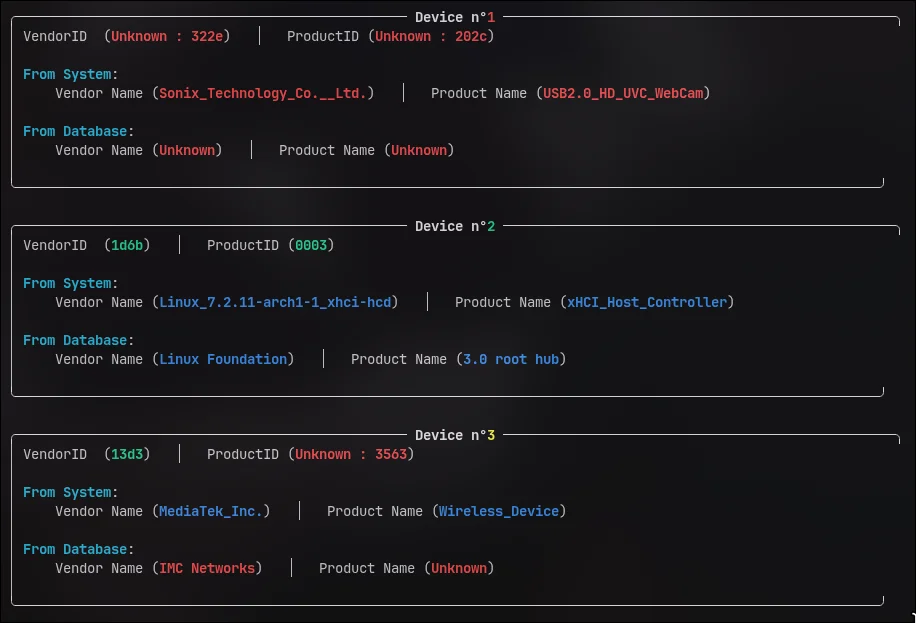
> cat context.md
DRUID is one of two security tools I built during my six-month internship as a Junior Cybersecurity Consultant at Fujitsu France. It targets a physical attack vector: USB ports. Since remote work spread, security teams have seen mouse jigglers used to fake activity, and cheap ESP32 boards (AtomS3U, T-Dongle S3) reprogrammed into Bad USB keyboards, hidden microphones or rogue Wi-Fi access points. DRUID spots these devices on a workstation before they can do harm.
> cat how-it-works.md
- 01Enumerates every connected USB device and reads its vendor and product IDs, natively on Windows and through systemd on Linux.
- 02Cross-references them with a reference CSV database: known vendor and product is a low risk, known vendor only is a medium risk, unknown is a major risk.
- 03Written in C, documented with Doxygen, backed by a full technical specification and a test book that tracks every scenario, anomaly and fix.
- 04Deployed in a lab I built from scratch: a VMware ESXi server, a Windows Server 2025 domain controller with Active Directory, GPO for Windows 10 and 11 clients, Ansible and cron for Debian and Linux Mint.
> cat lessons.md
Low-level system programming on two very different platforms, and finding libraries that met both the technical constraints and my tutor's requirements. Building the lab end to end (hypervisor, addressing plan, domain, automated deployment) was the most formative part of the internship: it taught me server administration, virtualisation and how to solve infrastructure problems on my own.